
In a power cut, a charged battery is the difference between being cut off and being in touch. The good news is you don’t need much to cover the basics. A phone power bank costs less than a takeaway. A portable power station costs more, but can keep a router, lights and a laptop going for a day or more.
This guide walks up the sizes, from pocket to cupboard, so you can buy what you actually need. It fits alongside the UK Government’s Be Ready advice to plan for 3 days without help, and our power cut guide.
The two numbers that matter
Every battery has two numbers worth knowing.
- Capacity, in watt-hours (Wh). How much energy it holds. Think of it as the size of the fuel tank.
- Output, in watts (W). How much power it can deliver at once. Think of it as how fast the tap runs.
A big tank with a slow tap can run a router for days but can’t boil a kettle. A small tank with a fast tap can run a hairdryer, but only for a few minutes. You need enough of both for the things you care about.
Power banks are usually sold in milliamp-hours (mAh) instead of Wh. That’s fine for comparing one power bank with another, but it isn’t the whole story, as you’ll see below.
Tier 1: phone power banks (10,000 to 20,000 mAh)
This is where everyone should start. A pocket power bank keeps your phone alive, and your phone is your torch, radio, news feed and way of reporting the fault.
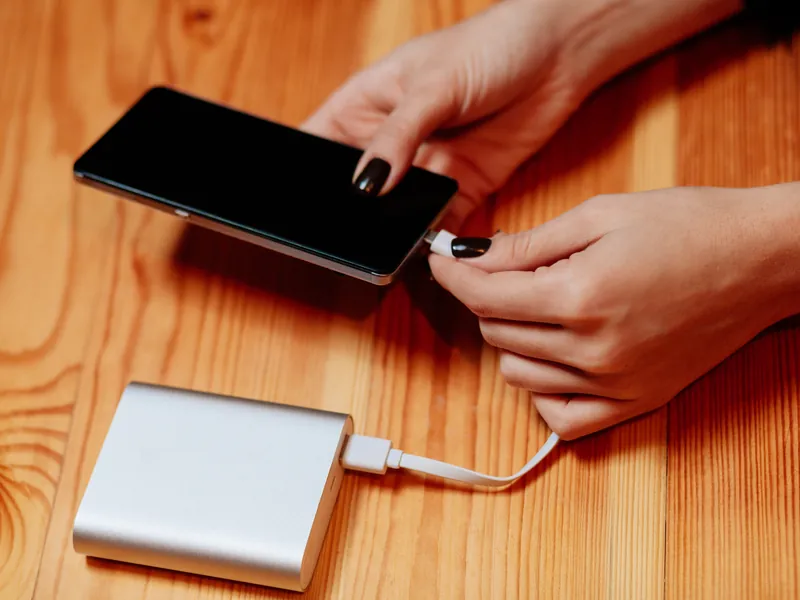
What the numbers mean in real life. Some energy is lost turning the battery’s voltage into the voltage your phone needs, so you never get the full rated capacity. Anker’s own guidance says a 25,000 mAh bank typically delivers around 55 to 70% of its rating. As a rough rule:
- 10,000 mAh: around 1.5 to 2 full charges of a typical smartphone.
- 20,000 mAh: around 3 to 4 full charges.
For a 3-day power cut, a 20,000 mAh bank per adult is a sensible target, or one 10,000 mAh bank each if you’re careful with screen time.
Look for USB-C PD (Power Delivery). It charges modern phones much faster and lets you top up the power bank itself quickly when the power comes back. A bank that can be charged while it charges your phone (pass-through) is handy but not essential.
Flying? UK airlines generally allow power banks up to 100 Wh in hand luggage, not in the hold. A 20,000 mAh bank is around 72 Wh, so it’s fine. Check your airline before you fly with anything bigger.
We’d pick Anker first. Their banks are well built, honestly rated and widely sold. Buy the Anker 20,000mAh power bank here.
Tier 2: laptop power banks (around 25,000 mAh, 100 W)
If you work from home, a laptop power bank is the next step up. These have a USB-C port rated at 100 W or more, which is enough to charge most laptops as well as phones and tablets.
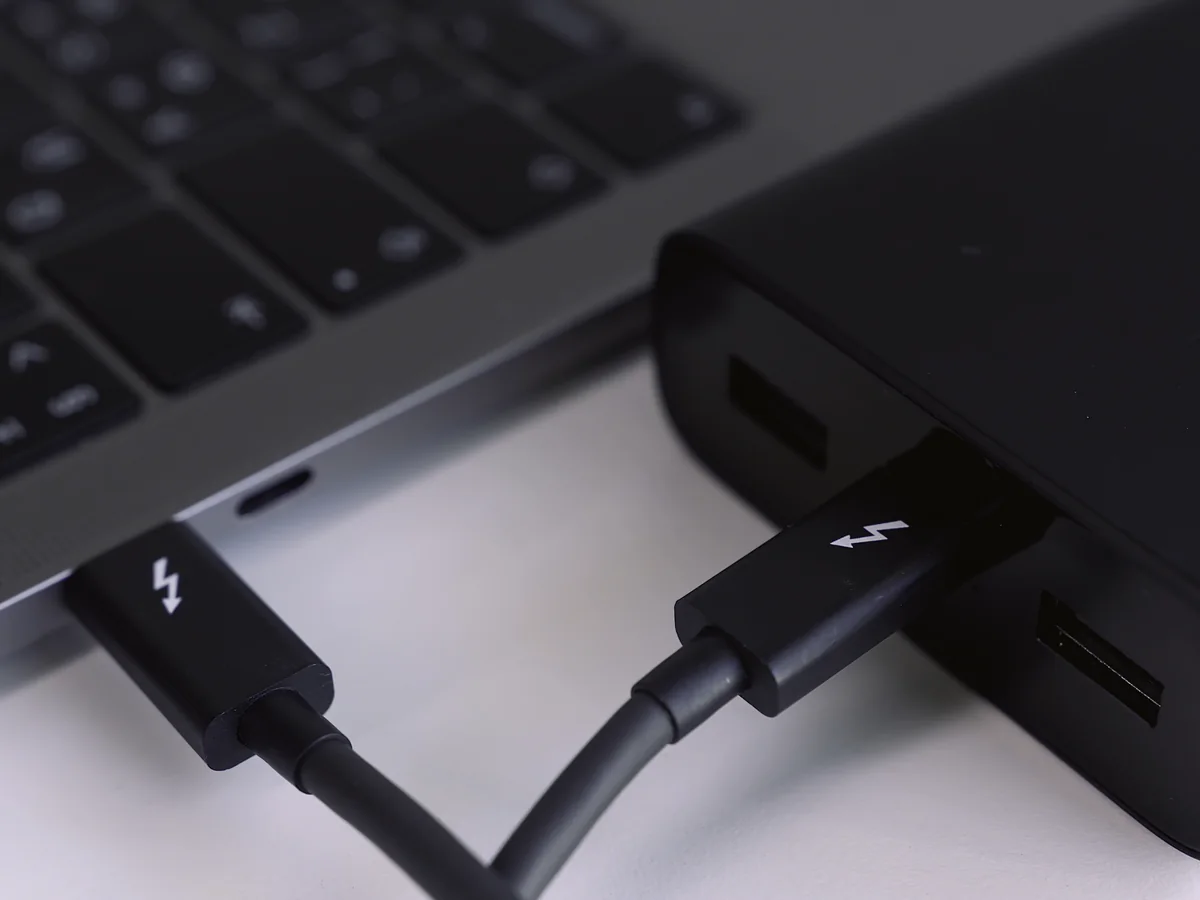
A good example is the Anker Laptop Power Bank (25K, 165W). Anker’s UK spec sheet lists 25,000 mAh (90 Wh), 100 W from each USB-C port and 165 W in total across two devices. At 90 Wh it’s still under the 100 Wh airline limit.
In a power cut, that’s roughly one full laptop charge plus a couple of phone charges. Enough to keep working, or keep the family’s devices going, through an evening. Buy the Anker 25,000mAh laptop power bank here.
Tier 3: small portable power stations (around 250 to 500 Wh)
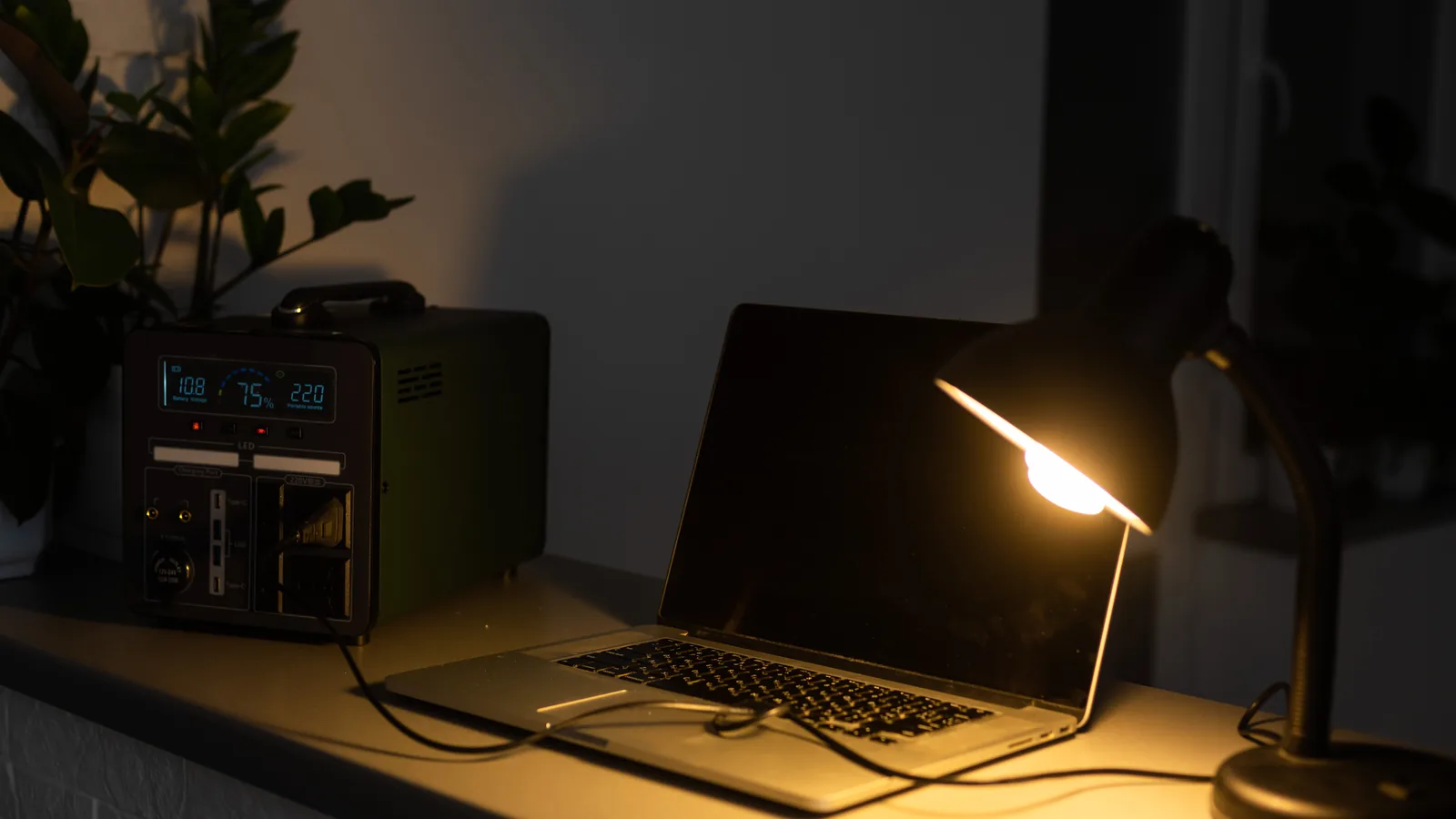
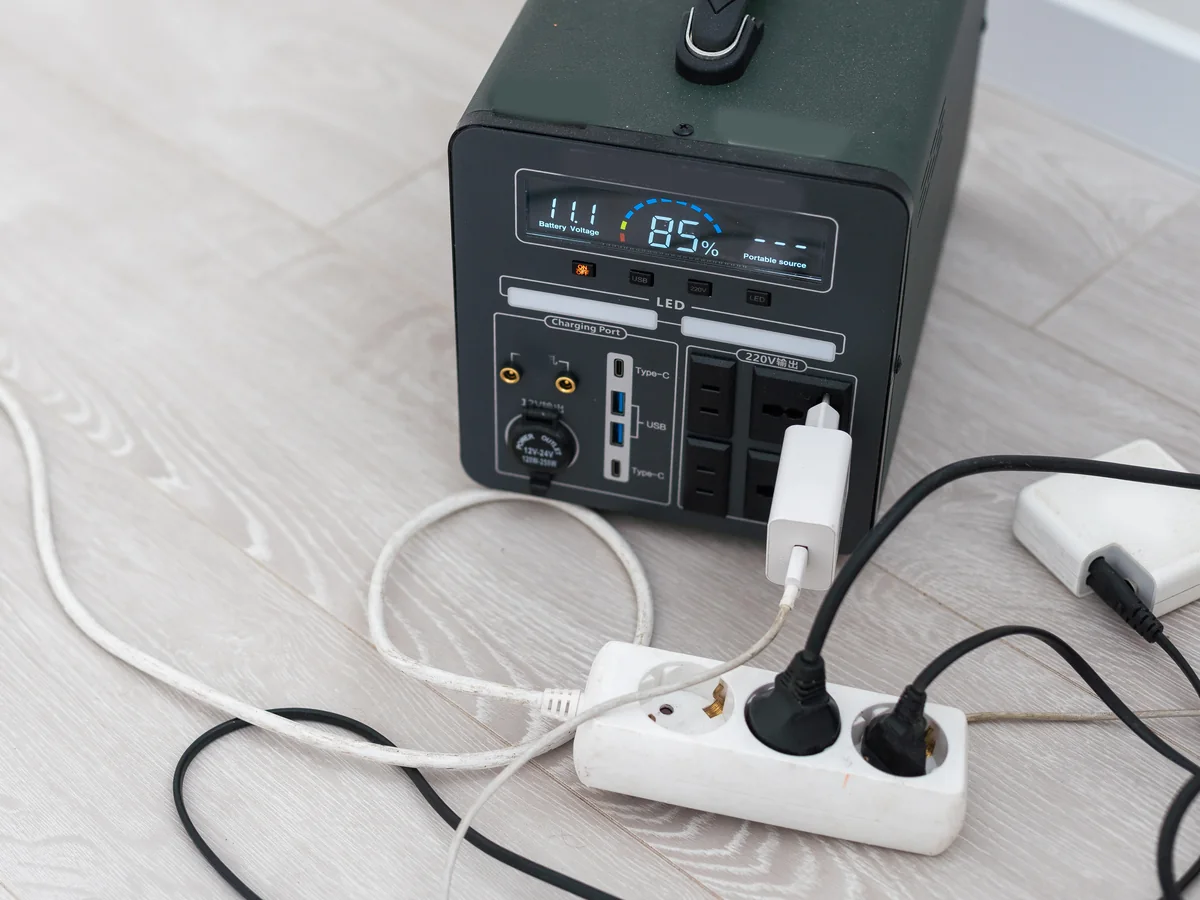
A portable power station is a big rechargeable battery in a box, with ordinary UK three-pin sockets on the front as well as USB ports. The small ones weigh a few kilos and are easy to keep in a cupboard.

At this size you can run:
- Your broadband router, if your area still has a working connection. Most use 10 to 20 W, so 250 Wh can run one for many hours. See our offline library guide for what to do if the internet goes down too.
- LED lamps for every evening of a 3-day cut.
- Phones, tablets and a laptop, many times over.
- A CPAP machine for a night or two, depending on the model and whether the humidifier is on. Check your device’s wattage and ask the manufacturer before relying on it.
Current examples include the Anker SOLIX C300X (288 Wh, 300 W) and the EcoFlow RIVER 3 Plus (286 Wh, 600 W, LiFePO4 battery). The extra output on the RIVER 3 Plus gives more headroom for things like a small fan or a laptop and lamp together.
Buy the Anker SOLIX C300X here or Buy the EcoFlow RIVER 3 Plus here.
Tier 4: larger power stations (around 1,000 to 2,000 Wh)
This is the size to consider if you want to keep a fridge cold, or you have someone at home who depends on powered equipment. These units are heavier (often 10 kg or more) and cost several hundred pounds or more, so it’s worth understanding what you’re buying.
Inverter rating and surge
The inverter turns battery power into mains-style power for the sockets. Its rating, in watts, is the most it can supply continuously. Anything that heats (kettles, toasters, hairdryers, heaters) draws a lot. A UK kettle is usually around 3,000 W, which is more than most portable inverters can supply. So a kettle is only possible on the very biggest units, and even then it eats a lot of the battery for one brew. A camping stove used outdoors is a better plan for hot drinks.
Fridges and freezers have a motor that needs a short burst of extra power to start, called surge. Larger power stations are built to handle this, but check the surge figure if you’re unsure.
Pass-through and UPS mode
Many larger units can stay plugged into the mains with your router or computer plugged into them. If the power goes, they switch over automatically within milliseconds, like an uninterruptible power supply (UPS). Anker quotes 10 ms switchover for the SOLIX C1000 Gen 2, for example. That’s fast enough for most home equipment, but check before relying on it for anything critical.
Battery chemistry
Look for LiFePO4 (lithium iron phosphate, sometimes written LFP). It’s more stable than older lithium-ion types and lasts for thousands of charge cycles, which suits something that may sit in a cupboard for years. Current Anker SOLIX and EcoFlow RIVER 3 and DELTA 3 models use it.
Examples
- Anker SOLIX C1000 Gen 2: 1,024 Wh, 2,000 W output, 10 ms UPS switchover.
- Anker SOLIX C2000 Gen 2: 2,048 Wh, 2,400 W output.
- EcoFlow DELTA 3 Plus: 1,024 Wh, 1,800 W output, LiFePO4, expandable with extra batteries.
A 1,000 Wh unit can keep a typical fridge-freezer running for many hours (work out your own figure below), so you could keep it going through a long evening and overnight, then rely on the closed door. Buy the Anker SOLIX C1000 Gen 2 here or Buy the EcoFlow DELTA 3 Plus here.
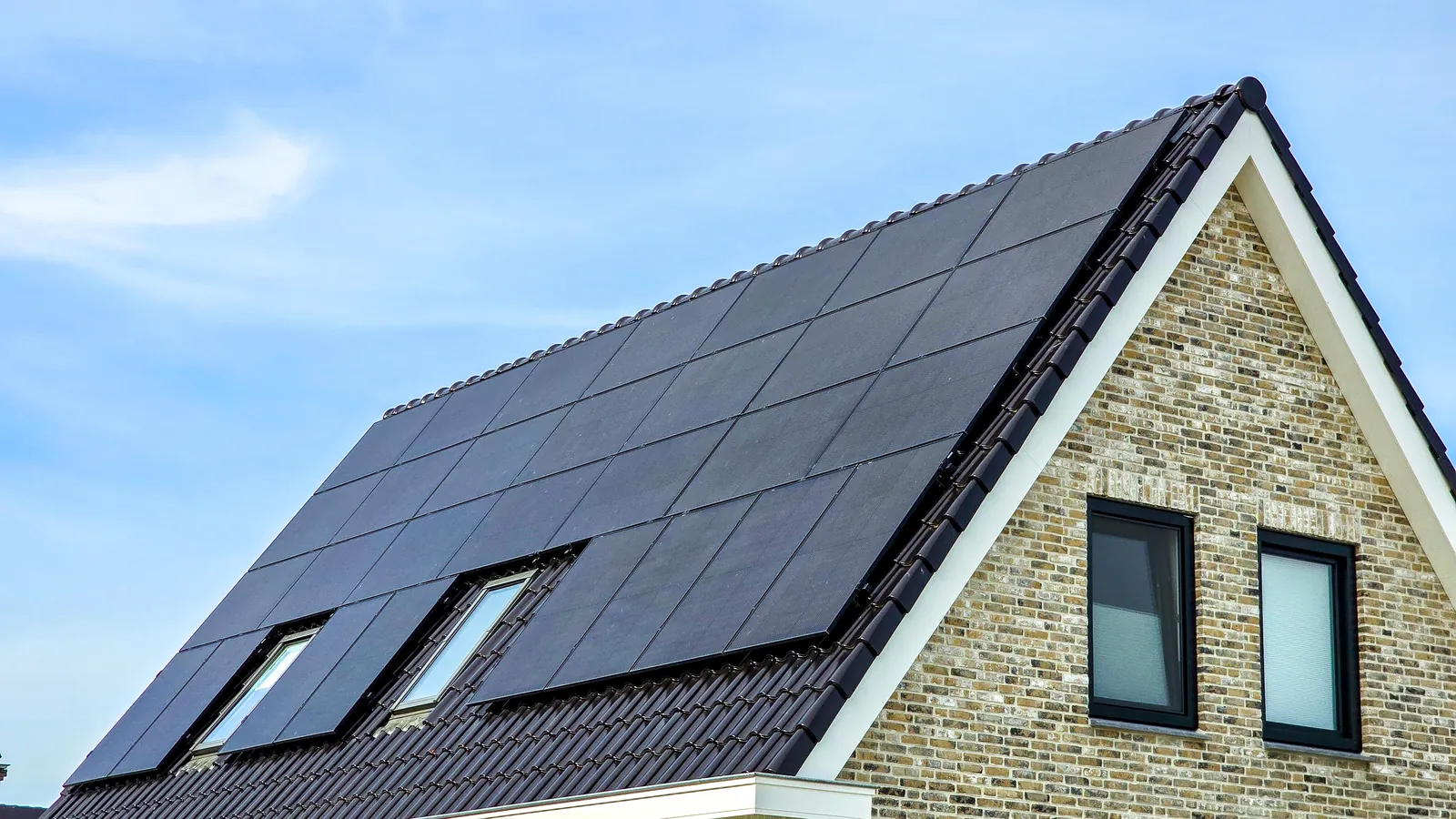
If you already have rooftop solar or an electric car, you may have bigger options. See solar panels in a power cut and using your EV as a backup battery.
How to work out what you need
You only need one sum: watts x hours = watt-hours.
- List what you want to run and find each item’s wattage. It’s usually on a label on the back or underneath, or on the plug-in power adapter.
- Multiply by the hours you want to run it.
- Add them up, then add about 15% for losses in the inverter (more if you only run very small loads from the AC sockets).
Worked example, for one evening and night:
- Router: 12 W x 12 hours = 144 Wh
- Two LED lamps: 2 x 5 W x 5 hours = 50 Wh
- Laptop: 45 W x 3 hours = 135 Wh
- Four phone charges: about 15 Wh each = 60 Wh
Total: 389 Wh. Add 15% and you need around 450 Wh. That’s the top of tier 3, or a comfortable fit for a tier 4 unit.
For a fridge, look at the energy label. It shows yearly use in kWh. Divide by 365 to get daily use. A fridge-freezer rated at 250 kWh a year uses roughly 0.7 kWh (700 Wh) a day, or about 30 Wh an hour on average. Real use goes up in warm kitchens and when the door is opened.
Quick comparison
| Tier | Typical capacity | What it runs | Rough cost |
|---|---|---|---|
| Phone power bank | 10,000 to 20,000 mAh (about 37 to 74 Wh) | Phones, earbuds, a small torch | £ |
| Laptop power bank | About 25,000 mAh (about 90 Wh), 100 W+ USB-C | A laptop charge plus phones | £ |
| Small power station | 250 to 500 Wh, 300 to 600 W | Router, lamps, laptops, phones, some CPAP machines | ££ |
| Large power station | 1,000 to 2,000 Wh, 1,800 to 2,400 W | Fridge for hours, a home office, medical kit (check first) | £££ |
| Add-on solar panel | 100 to 200 W folding panel | Slowly refills a power station in daylight | ££ |
Adding solar: what to expect in the UK
A folding solar panel lets you refill a power station during a long outage. It’s a lovely bit of independence, but set your expectations carefully.

- Panels rarely hit their rated output. A 100 W panel is tested in ideal lab conditions. In real UK sunshine, expect noticeably less, and far less on cloudy days.
- Winter is the hard part. Short days and a low sun mean a panel may collect only a small fraction of its summer output in December, which is when power cuts from storms are most likely.
- Angle it at the sun and move it every couple of hours. A panel lying flat on the lawn does much worse.
- Keep it out of shade. Even a shadow across part of the panel cuts output sharply.
As a rough guide, a 200 W panel on a bright summer day might add a few hundred watt-hours. On a grey winter day it might add very little. So solar suits topping up a small or mid-sized power station over several days. It won’t replace mains power for a household.
All the power stations above have a built-in MPPT solar charge controller. That’s the part that gets the most out of a panel as the light changes. Just check the panel’s voltage and connector match the power station’s solar input. The easy way is to buy the same brand. Buy the Anker SOLIX PS100 panel here or Buy the EcoFlow 220W panel here.
Staying safe
- Never run a petrol or gas generator indoors, or in a garage, porch or shed attached to the house. The fumes can kill. Battery power stations are safe indoors, which is one big reason to choose them. Fit a battery carbon monoxide alarm either way.
- Give power stations space to breathe. Don’t cover the vents, and keep them away from water, heaters and direct sun.
- Don’t daisy-chain extension leads or plug one multi-way adaptor into another. Plug things in directly where you can.
- Buy from a reputable seller and check for UKCA or CE marking. Very cheap no-name power banks are a fire risk.
- Never plug a power station into your house wiring to back-feed it. That needs a proper installation by an electrician.
Looking after your batteries
A battery that’s flat when the lights go out is no use. For long-term storage, most manufacturers recommend keeping a power station part-charged (EcoFlow’s manuals, for example, say to store it at around 60%) and cycling or topping it up every 3 months. Don’t leave one unused for more than 6 months. Check the manual for your exact model, as the steps vary.
The simple habit: put a reminder in your calendar every 3 months to check and charge your power banks and power station. Do it when the clocks change and you’ll rarely forget. If you have a weather warning, charge everything to full.
Medical equipment
If anyone in your home relies on a CPAP machine, oxygen concentrator, powered bed or other electrical medical device, ask the device maker how long it will run from a battery and whether they recommend a particular one. Then register with your electricity network operator’s Priority Services Register. It’s free, and it means you get extra support and updates during a power cut.
What we’d buy
- Everyone: a 20,000 mAh power bank per adult. Anker is our first pick.
- Working from home: add a 25,000 mAh laptop power bank.
- Want lights and Wi-Fi through a long cut: a 250 to 500 Wh power station such as an Anker SOLIX or EcoFlow RIVER.
- Fridge, medical kit or a big household: a 1,000 Wh+ LiFePO4 power station such as the Anker SOLIX C1000 Gen 2 or EcoFlow DELTA 3 Plus, plus a same-brand folding solar panel if you have a garden.
Add your chosen kit to your 3-day checklist, and see our recommended kit for the rest.
This guide contains affiliate links to Amazon UK. If you buy through them we may earn a small commission, at no extra cost to you. How we choose kit.