
A 3-day food store only helps if it’s still good to eat when you need it. Tins rust in damp garages, mice chew through cardboard and plastic bags, and food kept somewhere hot goes off faster. A few simple habits keep your store safe, tidy and easy to rotate.
The golden rule: cool, dry and dark
All food, including tins, keeps best somewhere cool, dry and out of direct sunlight. Heat shortens shelf life and spoils flavour. Damp makes tins rust and packets go mouldy. Big swings in temperature cause condensation, which brings both.
Good spots in most homes: a kitchen cupboard away from the oven, under the stairs, a spare-room wardrobe, or under a bed. A garage or shed can work well too, but only if you prepare it properly.
Storing food in a garage or shed
Garages are handy, but they’re often damp, get hot in summer and cold in winter, and attract mice and rats. If that’s where your store goes:
- Keep everything in a lockable, hard plastic box with a tight lid. Clip-lock or latching lids keep pests, damp and dust out, and keep children and anyone else out of it too (buy here).
- Choose stackable boxes of the same size, so they sit securely on top of each other and take up less floor space (buy here).
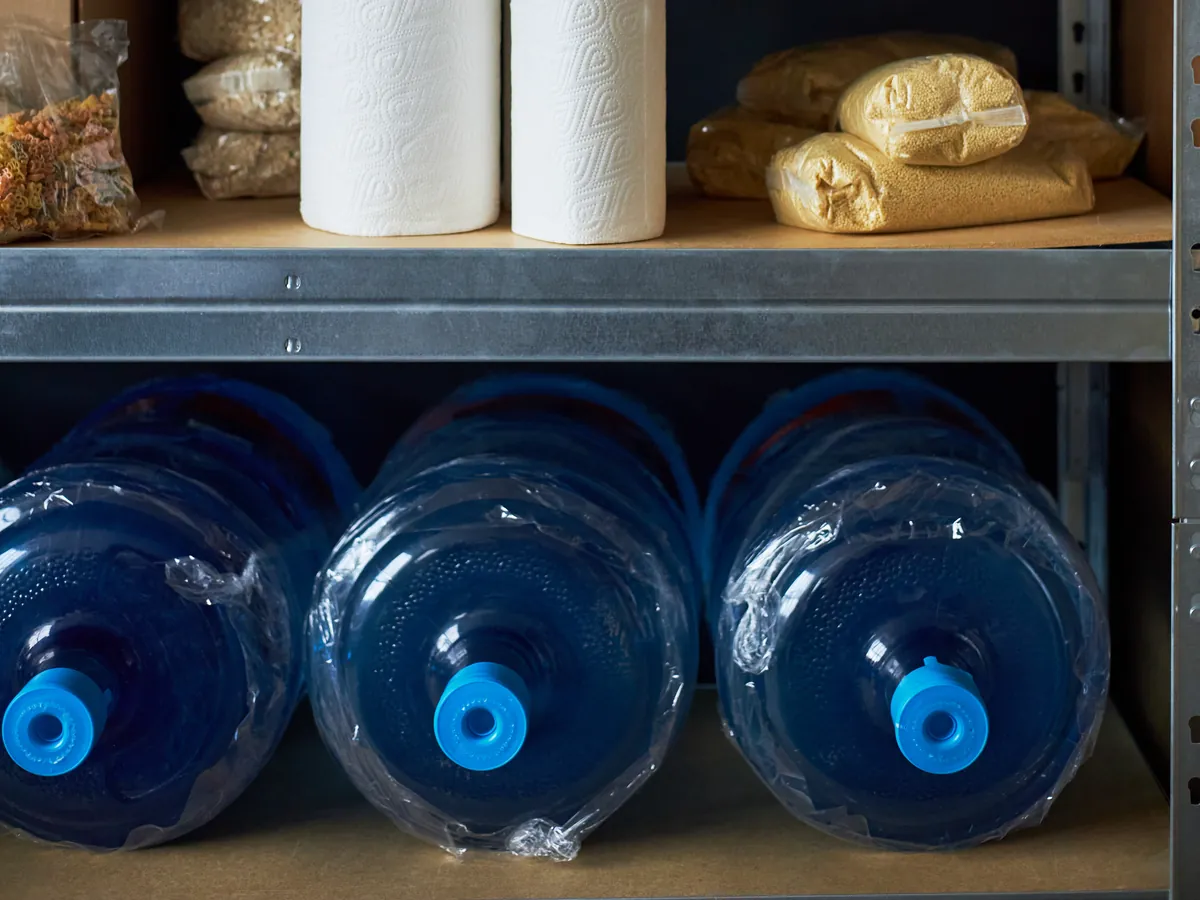
- Get it off the floor. Concrete floors are cold and draw up moisture. Use sturdy shelving or a pallet (buy here).
- Add a moisture absorber inside each box or nearby, and replace it when full (buy here).
- Keep it well away from chemicals, petrol, paint, weedkiller and pest poisons. Fumes can taint food and packaging.
- Avoid frost and heat. Freezing can split bottles and damage some foods, and a hot garage roof can bake a store in summer. If yours swings a lot, keep the food indoors and the bulky kit in the garage.
Keeping out mice, rats and insects
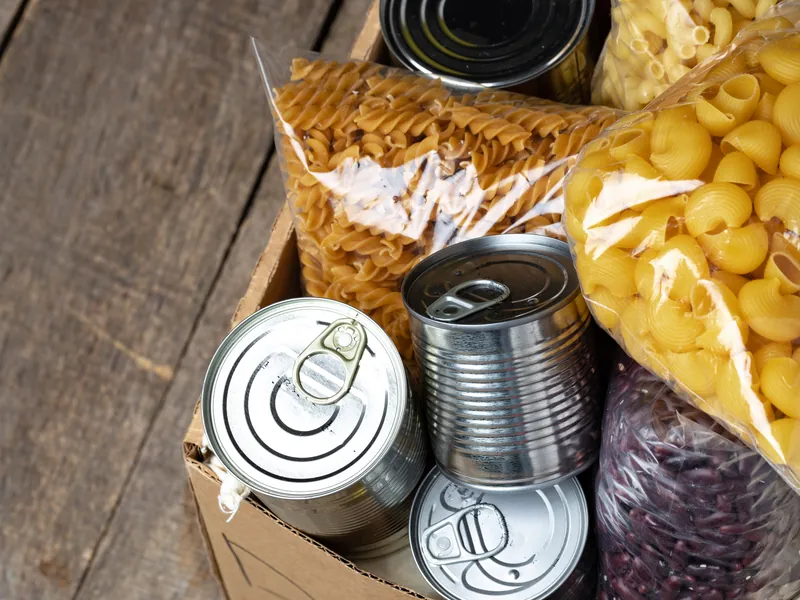
- Nothing in cardboard or thin plastic. Rodents chew straight through both. Decant cereal, rice, pasta and snacks into hard plastic or metal containers with sealed lids (buy here).
- Check regularly for signs such as droppings, gnaw marks or holes in packets. If you find any, throw that food away and clean the box.
- Keep the area clean and tidy. Clutter, spilled bird seed and pet food draw pests in.
- Seal gaps around garage doors and pipes. A mouse can squeeze through a gap the width of a pencil.
- Watch for pantry moths and weevils in flour, oats and dried fruit. Sealed containers stop them spreading.
Looking after your tins
- Throw away any tin that’s bulging, leaking, badly dented on a seam or rusty.
- Stack tins no more than a few high, so the bottom ones don’t dent.
- Most tins have a long best-before date, but quality fades with time and heat. Eat and replace them rather than leaving them for years.
Make rotation easy
- First in, first out. Put new food at the back and use from the front.
- Label each box with what’s inside and the earliest best-before date. A list taped inside the lid helps.
- Set a reminder every 6 months, for example when the clocks change, to check dates and swap anything close to running out into your normal meals.
- Buy what you already eat, so nothing goes to waste.
Don’t forget water
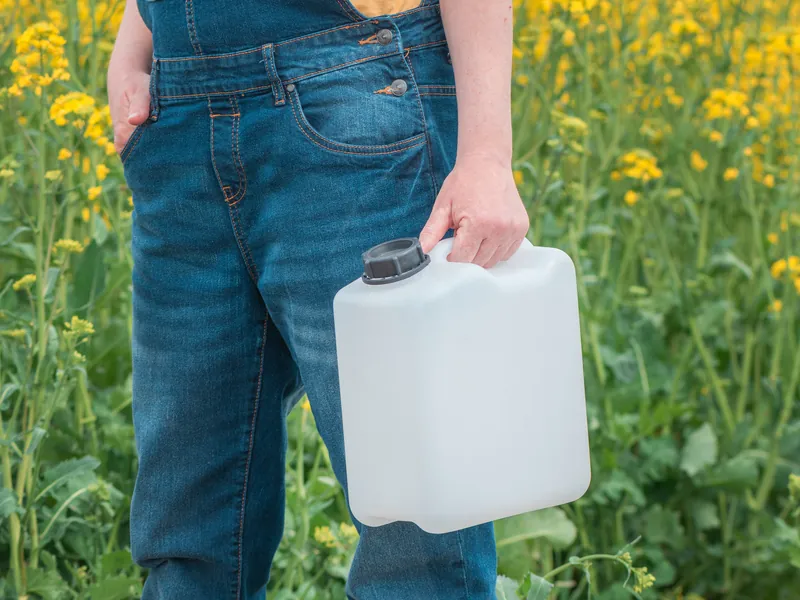
Water needs the same care: sealed, cool, dark, and away from chemicals. Bottled water lasts longest unopened. See our water guide for how much to keep.
Not sure what to store? Download our free 3-day emergency food lists for meat eaters, vegetarians and vegans, and tick it all off on the 3-day checklist.
This guide contains affiliate links to Amazon UK. If you buy through them we may earn a small commission, at no extra cost to you. How we choose kit.