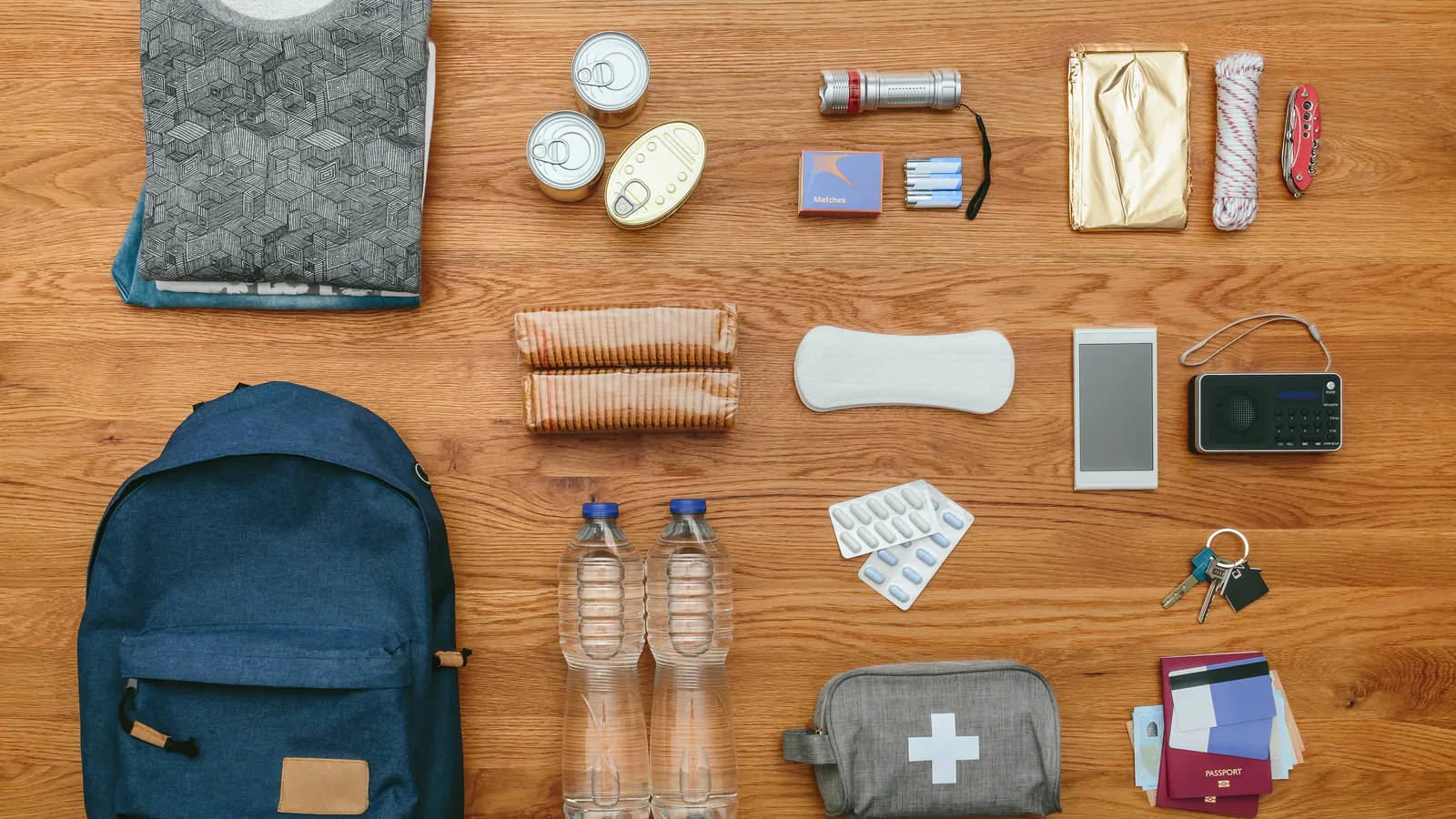
A grab bag is a small bag, packed in advance, that you can pick up and go with if you have to leave home quickly: a flood warning, a gas leak, a fire nearby. The aim isn’t to survive in the wild. It’s to get through a night or two somewhere else, such as a friend’s house, a rest centre or a hotel, without panic.
 2 pagesGrab bag checklistTick-box packing list, plus a cut-out emergency contacts cardInteractive + A4 PDFThe 3-day checklistTick off what you have, then download or print it
You probably already own half of it. Here’s how to put one together for under £50.
The bag
Any sturdy backpack you already have is ideal. Choose one you can carry comfortably, and keep it somewhere easy to reach, such as a hall cupboard, not the loft.
What to pack
Essentials (mostly things you already have)
- Copies of key documents in a waterproof bag: ID, insurance, prescriptions, emergency contacts
- A list of phone numbers on paper, in case your phone dies
- A week’s supply of any regular medicines, plus a copy of the prescription
- Spare glasses, hearing aid batteries, or other everyday aids
- A change of clothes, warm layers and a waterproof
- Toiletries and a small towel
- Spare house and car keys
- Some cash in small notes
Worth buying (roughly £30 to £50 in total)
- A small, bright LED torch or head torch, plus batteries
- A power bank and charging cable
- A basic first aid kit
- Bottled water and a few snacks that keep well
- A foil emergency blanket
- Hand sanitiser and wet wipes
If you have children or pets
- Nappies, formula, a comfort toy
- Pet food, lead, carrier and vaccination records


Keep it ready
- Tell everyone at home where the bag is.
- Check it every six months: medicines, batteries, water, children’s clothes sizes.
- Keep the power bank charged.
When to use it
Always follow instructions from the emergency services. If you’re told to leave, go promptly and take the bag. If you’re told to stay inside, stay inside. Sign up for flood warnings and check your flood risk on GOV.UK if you live near a river or the coast.
For a home that can ride out 3 days without leaving, see our 3-day checklist and the kit we recommend.